“I don’t see the point of teaching a class without him here to question everything.”
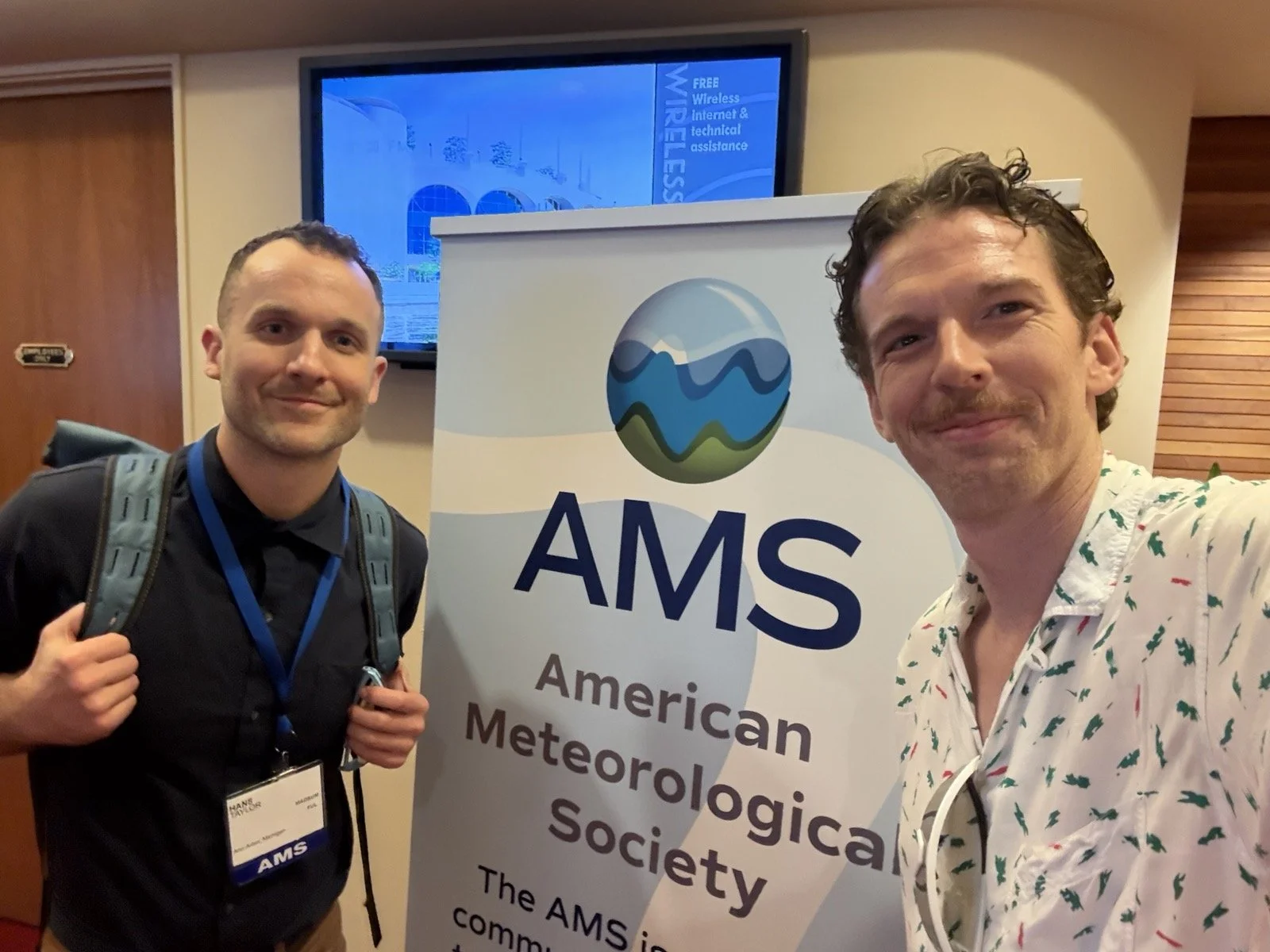
Attending my first conference with a dear friend at the 2026 American Meteorological Society Madison Summit in Madison, Wisconsin (2026).
My passion for understanding nature and helping society has led me to study the curious behavior of supercooled water, its freezing in the atmosphere, and its influence on precipitation. This process supplies much of the rain and snow on Earth. The water that fills the rivers and lakes that you, I, and our neighbors rely on to drink, to bathe, and to eat.
Tiny particles in the atmosphere cause water droplets in clouds to freeze at warmer temperatures than water freezing on its own. These particles are known as ice-nucleating particles, or INPs for short. Knowing their concentrations in the atmosphere and the temperature at which they cause water to freeze support weather and climate forecasting. Uncertainty in these two values is a persistent challenge for the INP-measuring community. It is often a factor of five, and in some cases three orders of magnitude.
Currently, I am investigating methods to reduce temperature uncertainty in INP measurements.
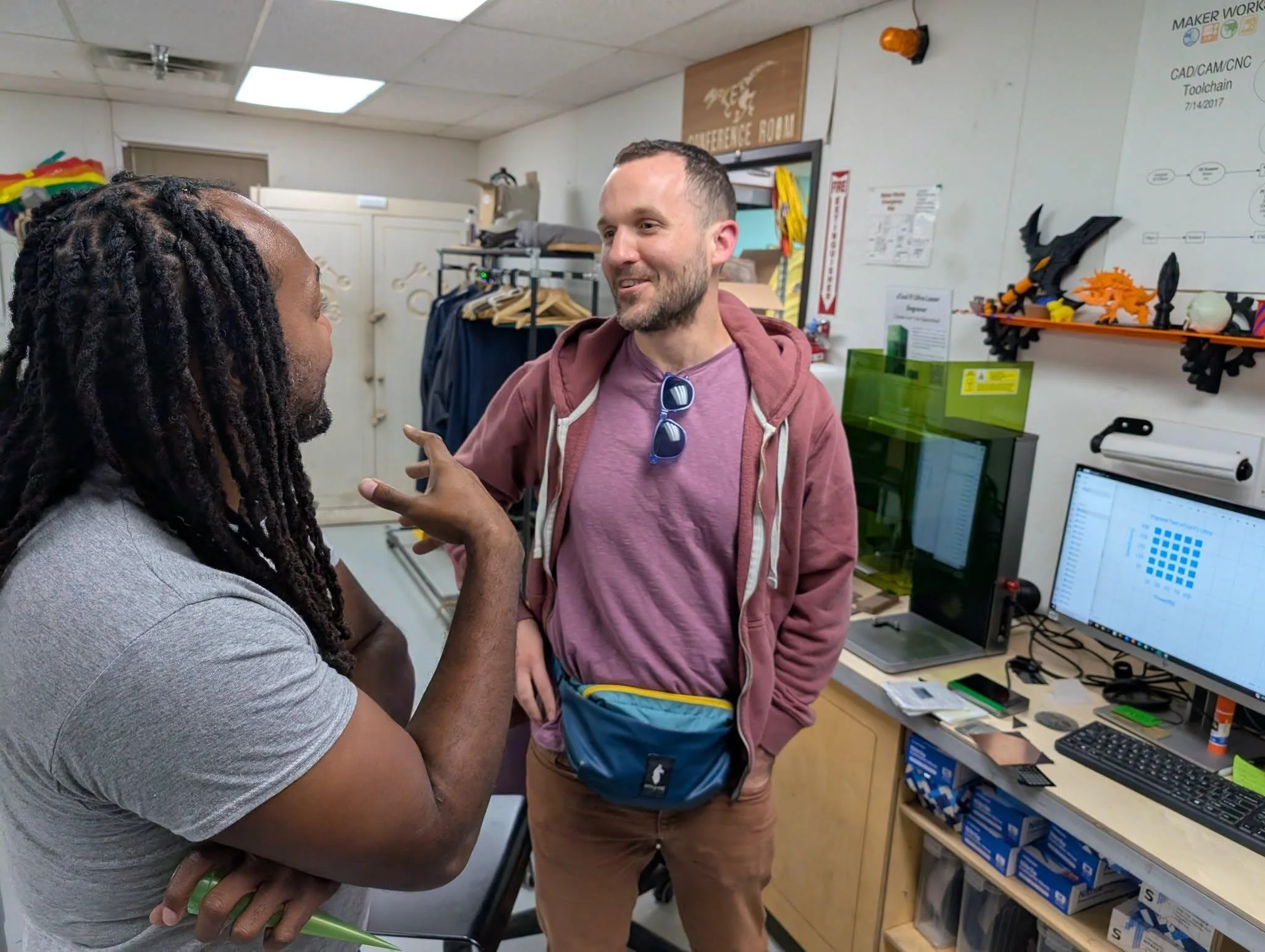
Hypothesizing the cause of a particular “impact crater” appearance of a recently laser ablated surface at Marker Works in Ann Arbor, Michigan (2025).