The Shape of a Water Droplet
The shape of a water droplet depends on the surface it rests on. Its shape can be changed by modifying the surface. The side-by-side photos below show two droplets of equal volume on two different surfaces of the same material. The left surface, made of ordinary copper, causes the droplet to take a hemispherical shape. The right surface is also made of ordinary copper, but has been modified so that it causes the droplet to take a spherical shape.
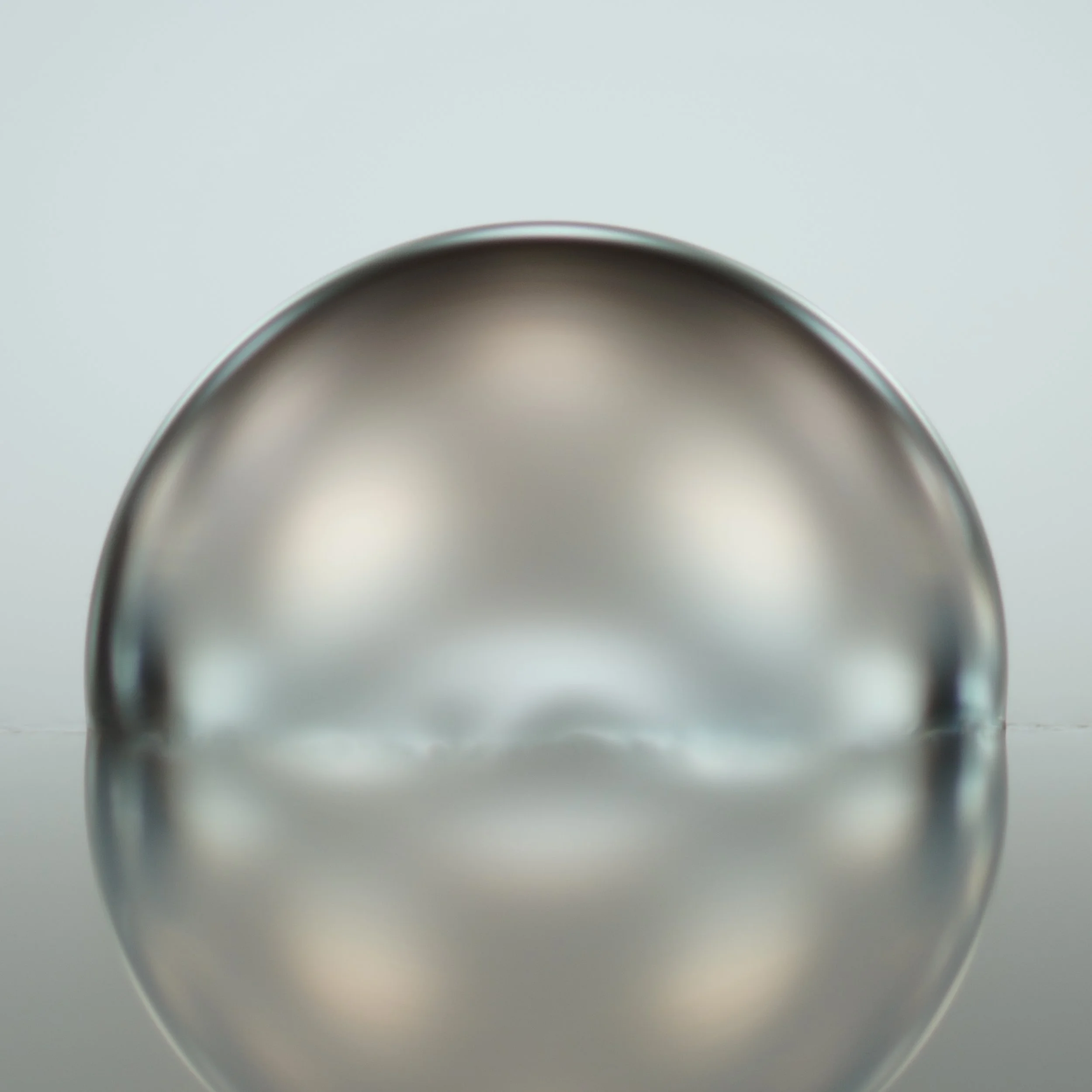
Hydrophobic
Ordinary Copper Surface
Water Contact Angle: 90º
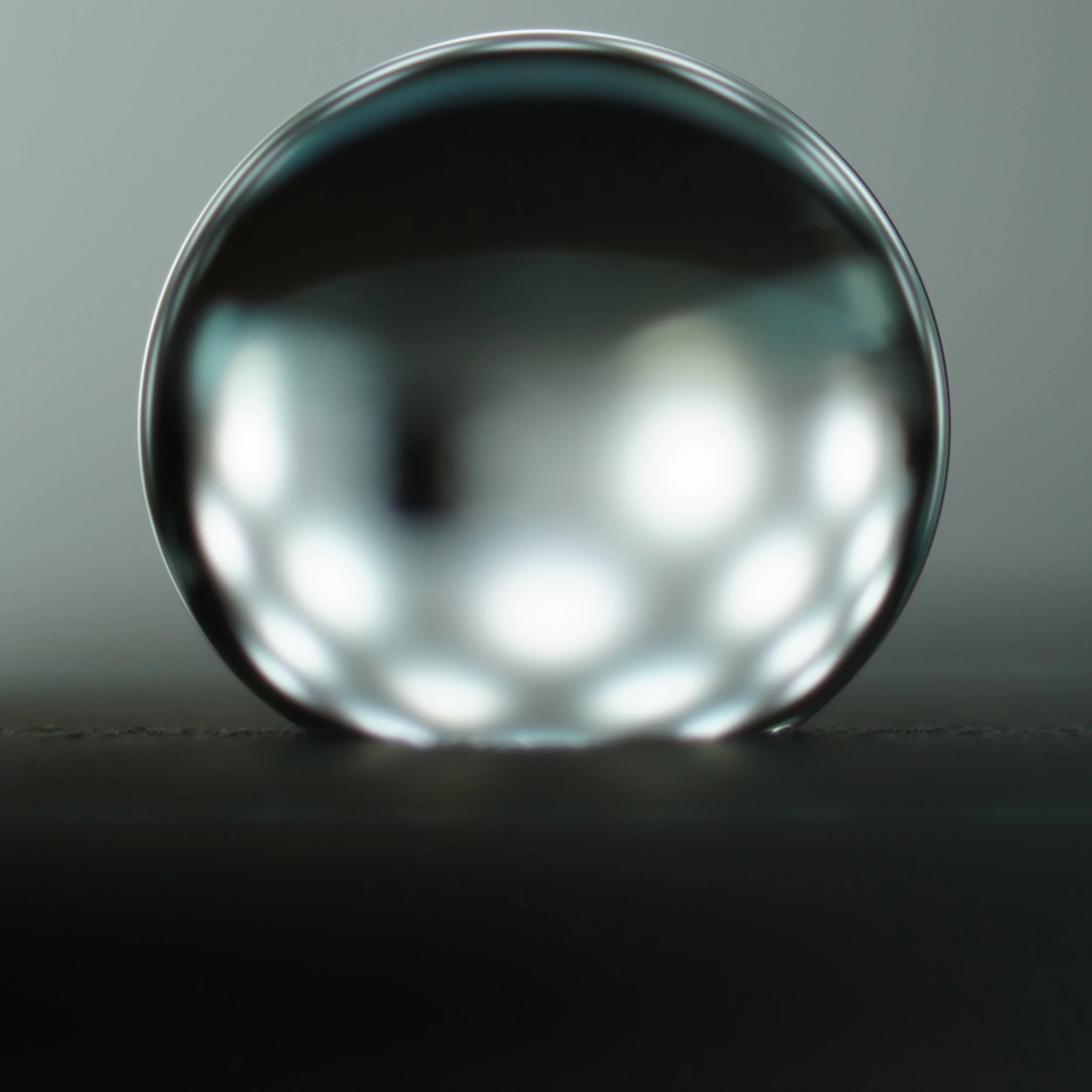
Superhydrophobic
Modified Copper Surface
Water Contact Angle: 150º
The Evaporation of a Water Droplet
The shape of a water droplet and the rate at which it evaporates depends on the surface it rests on. The time-lapse video below shows two droplets of equal volume on two different surfaces: the left surface causes the droplet to take a hemispherical shape, and the right surface causes the droplet to take a spherical shape. Although their volumes are equal, their surface areas are not. Water molecules at the droplet’s surface in contact with the ambient air have fewer hydrogen bonds tethering them to the liquid phase and therefore may leave the liquid more readily than molecules not at the surface. The right droplet has a smaller surface area than the left droplet. Less surface area means fewer of its molecules are in contact with the ambient air. Therefore, the spherical droplet (right) has a longer lifetime in a sub-saturated environment than the hemispherical droplet (left). The right droplet lasts over 35% longer (over 7 minutes longer) than the left droplet.